How to Pop Up on a Surfboard: A Step-by-Step Guide
The pop-up is the move that turns lying on a board into surfing. Here is how to do it, the mistakes almost everyone makes, and the drills that fix them.
Read this guide inFrançaisDeutschEspañolSvenskaPolskiNorskDansk
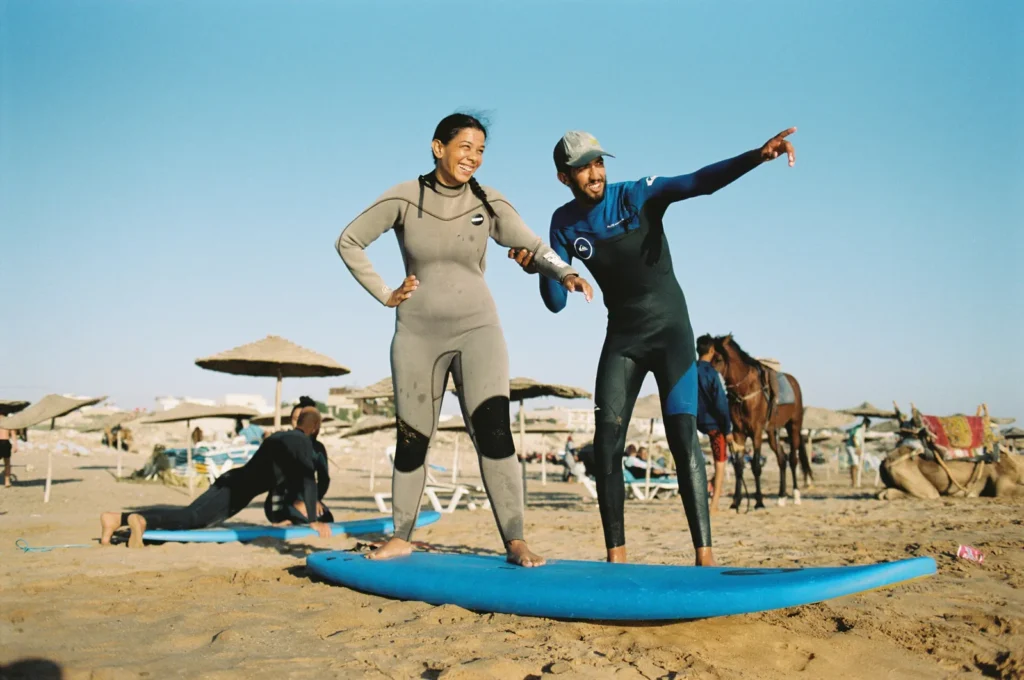
Learning how to pop up on a surfboard is the moment surfing really begins. It is the quick move from lying on your belly to standing in a balanced stance, and it decides whether you ride the wave or fall off the front. The good news: it is a skill, not a talent. With the right steps and a bit of repetition, everyone gets there.
This guide breaks the pop-up into simple steps, explains the mistakes we see every week on the beach in Tamraght, and gives you drills you can do on the sand or in your living room.
Before you pop up: find your stance
First, work out which foot goes at the back. Surfers who ride with the left foot forward are called regular; right foot forward is goofy. Neither is better.
A few ways to find yours:
- Imagine sliding on a slippery floor in socks. The foot you naturally put forward is usually your front foot.
- Ask a friend to give you a gentle, unexpected push from behind. The foot you step forward with to catch yourself is often your front foot.
- If you skate or snowboard, use the same stance.
If you are still unsure, try both on the sand. One will feel clearly more natural after a few goes.
How to pop up on a surfboard, step by step
Practise these steps slowly first. Speed comes later, once the movement is correct.
- Lie in the right spot. Your body should be centred on the board so the nose is just out of the water. Too far forward and you nose-dive; too far back and the board stalls.
- Paddle into the wave. Keep paddling until you feel the wave push the board. Most failed pop-ups start with standing up too early. If paddling still feels awkward, read our guide to paddling a surfboard.
- Hands under your chest. Place your palms flat on the deck next to your ribs, like the bottom of a push-up. Do not grab the rails.
- Look forward, not down. Lift your chest and eyes towards the beach. Where you look is where your weight goes.
- Push and bring your back foot up. Press up with your arms and slide your back foot across the board, near the tail, turned sideways.
- Bring your front foot through. In one movement, bring your front foot forward between your hands, landing roughly under where your chest was.
- Land low. Knees bent, feet a little wider than your shoulders, arms relaxed and out in front, eyes looking where you want to go.
The whole thing should end up as one smooth, quick movement. On land it can take a second or two; in the water, good surfers do it almost instantly.
The most common pop-up mistakes (and how to fix them)
Every surf coach sees the same handful of errors. Knowing them in advance saves you a lot of falls.
| Mistake | What happens | The fix |
|---|---|---|
| Looking at your feet | You fall forward or sideways | Keep your chin up and eyes on the beach |
| Going to your knees | Slow, wobbly, hard on steeper waves | Practise the full pop-up on land every day |
| Hands on the rails | Board tips and you slip off | Palms flat on the deck by your ribs |
| Feet too close together | No balance, you topple | Feet a bit wider than shoulders |
| Standing up straight | High centre of gravity, you fall | Bend your knees, stay low like a crouch |
| Popping up too early | The wave passes under you | Two more paddles once you feel the push |
| Front foot too far back | Board stalls and sinks at the tail | Aim for the front foot between your hands |
Land drills that make a real difference
Most of the progress in a pop-up happens out of the water. Muscle memory is built on the sand, then tested on the wave.
1. Slow-motion pop-ups
Draw a board in the sand or use a mat. Do ten pop-ups as slowly as you can, checking your hand position, your eyes and where your feet land. Slow repetition teaches the correct pattern.
2. Speed sets
Once the slow version is clean, do sets of five fast pop-ups. Stand, check your stance, lie down, repeat. This is closer to what happens in the water.
3. Eyes-closed pop-ups
Try a few with your eyes closed, then look down to check your feet. If they land in the same place each time, your body has learned the move.
4. Strength and mobility
Push-ups, planks and hip-opening stretches all make the pop-up easier. You do not need a gym; ten minutes a day on the rooftop or in your room is enough.
When and where to practise in the water
Start in the white water, the foam left after a wave has broken. It gives you a steady push without steep faces, so you can focus on the pop-up alone. Sandy beach breaks such as Tamraght beach, Devil’s Rock and Crocro are ideal because the bottom is soft and the waves are gentle on most days.
A few tips for your first sessions:
- Use a big soft-top. The extra volume and stability give you more time to stand.
- Surf a lower tide or smaller day while you learn. Check the live surf report to see what the waves are doing.
- Stay away from other surfers when you are practising. A quick read of our surf etiquette guide will help you know where to sit.
- Take breaks. Pop-ups get worse when your arms are tired, and that is when bad habits sneak in.
Once you can stand reliably in the foam, your coach will take you out to catch small, unbroken green waves. The pop-up is the same, but timing becomes more important.
Why a coach speeds things up
A pop-up feels right long before it looks right. A good instructor spots in seconds what you cannot feel: a back foot pointing forward, a hand grabbing the rail, weight too far back. Small corrections at the start stop you building habits that take months to undo.
At Surf Chill Vibe our local instructors start every beginner lesson with pop-ups on the sand, then stay with you in the water in small groups, pushing you into waves and giving feedback after each ride. If you are just starting out, our guide to learning to surf in Morocco explains what a first week usually looks like.
Keep it fun
You will fall a lot. Everyone does, including the surfers you watch riding the points. Laugh, paddle back out and try again. The day your pop-up suddenly clicks and you glide towards the beach standing up is a feeling you will remember.
If you would like to learn with a coach beside you, have a look at our surf packages. The 5-Day Surf Trip includes three days of lessons and all the material, which is plenty of time to go from your first pop-up to riding the white water with a big smile. Questions first? Just get in touch and we will help.
Frequently asked questions
How long does it take to learn to pop up on a surfboard?
Most people stand up in the white water during their first or second lesson. Making the pop-up smooth and reliable on unbroken waves usually takes a week or more of regular surfing and land practice.
Should I pop up to my knees first?
It is better not to. Going to your knees becomes a habit that is hard to break and makes it harder to stand on steeper waves, so practise the full pop-up from the start.
Which foot goes forward when I stand up on a surfboard?
If your left foot goes forward you are "regular", if your right foot goes forward you are "goofy". Your coach can help you find out on the sand before your first wave.
How can I practise my pop-up at home?
Draw a board outline on the floor or use a yoga mat and repeat slow, then fast, pop-ups every day. Push-ups, planks and hip mobility work all help your pop-up get quicker.
Ready for waves?
Stay in Tamraght: surf, explore or simply rest
Pick a ready-made week or build your own trip with surf, day trips and meals, and see the full price before you send anything.