Surf Etiquette for Beginners: Line-Up Rules Explained
The unwritten rules of the line-up keep everyone safe and happy. Here is what every beginner should know before paddling out.
Read this guide inFrançaisDeutschEspañolSvenskaPolskiNorskDansk
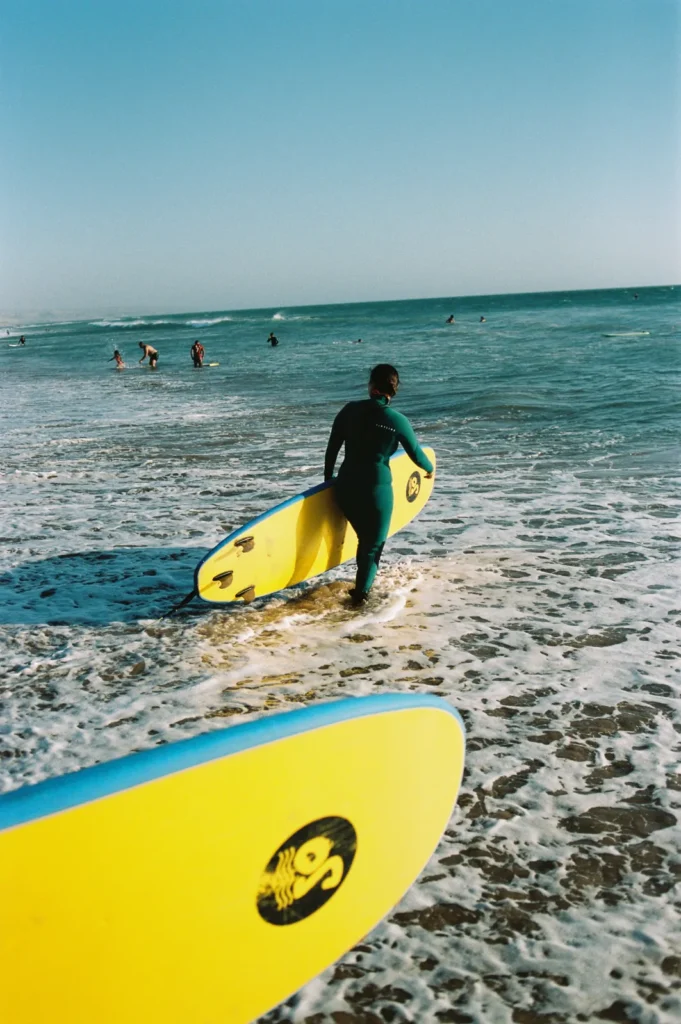
Surf etiquette for beginners is not about being cool or fitting in. It is about safety. A soft-top surfboard is big and heavy, the ocean is unpredictable, and when a lot of people share the same waves, everyone needs to follow the same simple rules. Learn them early and you will feel more confident, catch more waves and make friends in the water instead of enemies.
Here are the line-up rules we teach every student at our camp in Tamraght, explained in plain language.
Rule 1: Understand priority
Priority decides who gets the wave. The basic rule is simple: the surfer closest to the peak has priority. The peak is the point where the wave starts to break. As the wave peels to the left or right, the person nearest the breaking part has the right to ride it.
- If someone is closer to the curl than you and paddling for the wave, it is theirs.
- If someone is already standing and riding, the wave is theirs.
- If two people are equally placed, the one who stands up first usually takes it, but a little communication helps: a shout of “left” or “right” can mean you share a peak going in opposite directions.
In a busy line-up there is also a loose rotation: people who have been waiting longer usually get their turn. Watch how it works before you jump in.
Rule 2: Never drop in
Dropping in is the number one sin in surfing. It means taking off on a wave that someone with priority is already riding, putting yourself in front of them. It is dangerous for both of you and it ruins their wave.
Before you paddle for any wave, look along it towards the peak. If someone is on it, or paddling for it from a better position, pull back. If you drop in by accident, and every beginner does at some point, get off the wave as quickly and safely as you can and say sorry. That is all people want.
Rule 3: Do not snake
Snaking is when you paddle around someone to put yourself closer to the peak, so you can claim priority on the next wave. It is sneaky and people notice. Wait your turn. If you want to be in a better position, earn it by paddling back out after your wave, not by cutting in front of someone who was there first.
Rule 4: Paddle out wide, not through the line
When you paddle back out, avoid the area where people are riding. Go around the breaking waves through the channel, or paddle through the white water behind the surfers, not in front of them.
If you do end up in the path of someone riding, your job is to get out of their way. Usually that means paddling towards the white water behind them, so they can carry on along the clean face of the wave. Do not freeze and do not try to cross in front of them at the last second.
Our guide on how to paddle a surfboard explains how to get through the white water efficiently.
Rule 5: Hold on to your board
Your board is the most dangerous thing in the water. A loose soft-top flying back towards the beach can hit someone hard, and your leash can stretch several metres.
- Do not throw your board away when a wave comes. Hold it, or do a turtle roll.
- Keep the board beside you, never between you and a wave, when you walk out.
- Look behind you before you fall or bail, and fall away from other people.
- Protect your head with your arms when you come up after a wipeout.
- Check your leash before every session.
Rule 6: Surf where your level belongs
Being in the wrong spot is the root of most problems. Point breaks and reef breaks with experienced surfers are not places to learn, and a beginner in the middle of a crowded peak is a danger to everyone, including themselves.
| Your level | Where to surf | Examples near Tamraght |
|---|---|---|
| First sessions | White water on sandy beach breaks | Tamraght beach, Devil’s Rock, Crocro |
| Catching green waves | Gentle beach breaks and long mellow waves | Crocro, Imsouane Bay |
| Intermediate | Points and beach breaks with more power | Banana Point, Anza, Panoramas, Hash Point |
| Advanced | Powerful points and reefs | Anchor Point, Killer Point, Boilers |
Our guide to surf spots around Agadir and Taghazout goes into each spot in more detail. When in doubt, ask your instructor. Choosing the right wave is a big part of what a local guide does.
Rule 7: Respect the locals and the place
Many surf spots in Morocco are part of village life. Fishermen, families and local surfers have been using these beaches for a long time. Respect goes a long way.
- Say hello when you paddle out. A smile and “salam” are always welcome.
- Do not paddle straight to the peak at a new spot. Sit on the shoulder, watch, and take the waves others let go.
- Keep your group small at the busier spots, and do not take over a peak.
- Take your rubbish home, and pick up a piece or two you find on the beach.
- Dress respectfully once you leave the sand, and change discreetly.
Rule 8: Know your limits and help others
Do not paddle out in conditions you cannot handle. If the waves are too big, sit it out, watch from the beach and learn from what you see. There is no shame in that.
And if you see someone in trouble, help them or call for help. That rule comes before all the others. Surfers look after each other.
Quick etiquette checklist
- Look towards the peak before you paddle for a wave.
- If someone is on it, pull back.
- Wait your turn and do not snake.
- Paddle out through the channel or the white water.
- Keep hold of your board.
- Surf spots that match your level.
- Smile, say hello, apologise when you make a mistake.
Learn the rules in the water with a coach
Etiquette becomes second nature when someone shows you in real time: where to sit, which wave is yours, when to pull back. At Surf Chill Vibe, our local instructors take small groups to the spots that suit your level and explain the line-up as you go. If you are new to surfing, start with our beginner’s guide to surfing in Morocco, then have a look at our surf packages.
Frequently asked questions
What is the most important rule in surfing?
Do not drop in. The surfer closest to the peak, where the wave starts breaking, has priority, and you should never take off on a wave someone is already riding.
What does dropping in mean in surfing?
Dropping in means catching a wave that another surfer with priority is already riding or about to ride. It is dangerous and is the fastest way to upset people in the water.
Where should beginners surf?
Beginners should stay in the white water on sandy beach breaks, away from the main peaks where experienced surfers sit. Around Tamraght, spots like Tamraght beach, Devil's Rock and Crocro suit beginners.
What should you do if you drop in on someone by accident?
Pull off the wave as quickly and safely as you can, then apologise. A quick sorry and a smile goes a long way; everyone made mistakes when they started.
Ready for waves?
Stay in Tamraght: surf, explore or simply rest
Pick a ready-made week or build your own trip with surf, day trips and meals, and see the full price before you send anything.