Spot guide
Surfing Anchor Point: everything you need to know
The wave at Anchor Point
Anchor Point, often just called Anchors, sits on the northern edge of Taghazout and is the wave that put this stretch of coast on the international surf map. It is a right-hand point break over a rocky bottom. When a solid north-west swell lines up in winter, sets wrap around the point and peel down the rocks in long, fast walls that can run for hundreds of metres, giving time for several turns and, on the best days, a leg-burning ride.
It needs size to wake up. On small swells the wave is inconsistent and sectiony, and most surfers are better off elsewhere. From around head high it starts to connect, and when the swell reaches the ideal range the walls become long and powerful, with a steep take-off at the top of the point and faster sections further down. On very big days the currents along the point become strong and paddling back up the line-up is serious work.
Best conditions for surfing Anchor Point
| Factor | Best conditions |
|---|---|
| Swell direction | W to NNW |
| Wave size | Works from about 1 m, ideal 1.4 to 3.2 m, too big above about 4.5 m |
| Period | At least 10 seconds |
| Wind | Light wind or offshore from the NE |
| Tide | All tides |
| Best season | October to April |
Anchor Point faces south-west, which is why a west to north-north-west swell bends around the point and lines up so well. It needs a groundswell with a period of at least 10 seconds; short-period wind swell does not have the energy to wrap properly. The spot works on all tides, although the shape changes as the water moves, and our forecast rating above takes that into account. It has no shelter from the north wind, so the classic session is a clean morning with a light NE offshore, before the afternoon breeze arrives.
Who should surf Anchor Point?
Anchor Point is for advanced surfers only. You need to paddle strongly, take off late on steep waves, handle fast sections and deal with rocks, currents and a competitive line-up.
Beginners and improvers should not paddle out here. Watching from the rocks on a good day is a great experience in itself, and there are much better places to progress, such as Panoramas or the beaches around Tamraght.
Intermediates who surf reef breaks comfortably should build up at Hash Point first, then try Anchor Point on a smaller, quieter day with a guide who knows the entry and exit.
Hazards and local tips
- Entry and exit are over rocks. Watch a few sets from the shore to see where experienced surfers jump in and climb out, and time your move between waves.
- The current along the point is strong on big days and pulls you down the line. Keep paddling back up rather than sitting still, and know where you will come in before you go out.
- Booties help on the rocks and protect your feet from sea urchins.
- The line-up is competitive, with local surfers who have ridden the wave for years. Wait your turn, never drop in and do not paddle around people for priority.
- Surf it at first light on a weekday and you will get far more waves. Winter weekends and mid-morning on a good swell are the busiest times.
- If you are unsure, do not paddle out. A missed session is better than being caught inside on the rocks.
How to get to Anchor Point from Tamraght
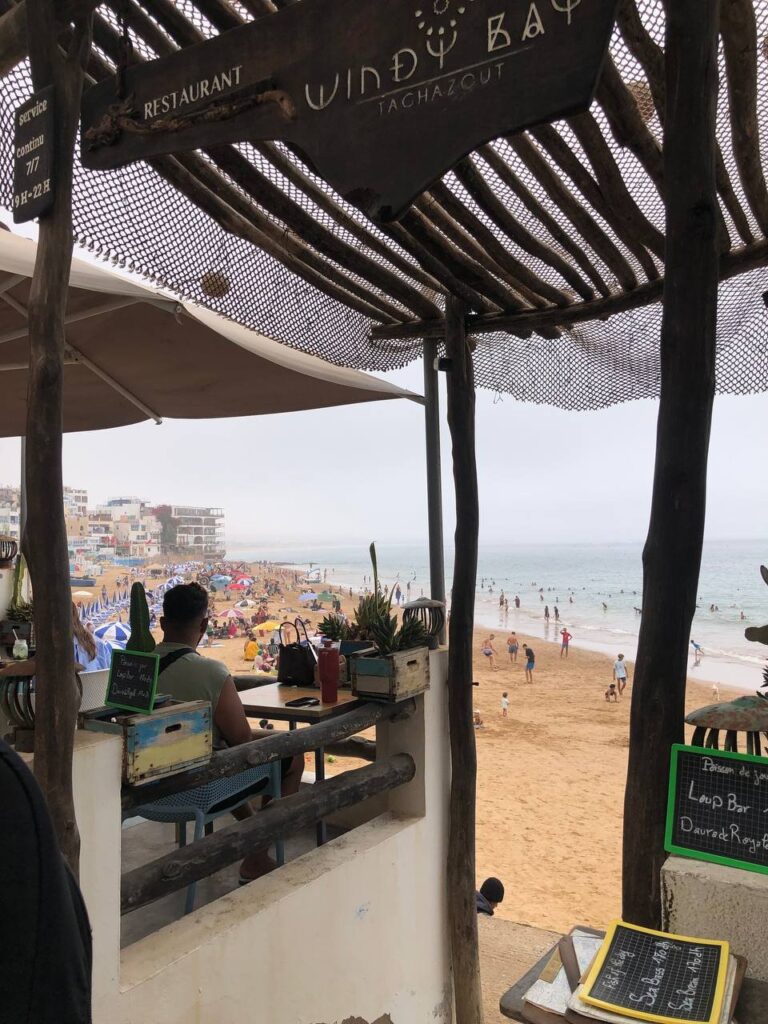
Anchor Point is about 15 minutes by car from our riad in Tamraght. Follow the coast road north through Taghazout, and the point is at the northern end of the village. From Agadir it is simply a little further along the same road. Mysteries is right next door, and Killer Point, another famous right named after the orcas once seen there, is a short drive further north.
When to go to Anchor Point
The season runs from October to April, when North Atlantic storms send long-period swell from the west and north-west. In summer Anchor Point is often too small, and it is better to enjoy the beach breaks. The water is around 17 to 18°C from December to April, so a good 4/3 wetsuit is essential for long sessions. More on this in our Morocco water temperature and wetsuit guide.
On the day, go early. First light usually brings the cleanest conditions and the smallest crowds, before the north wind picks up and before the line-up fills.
Surfing Anchor Point with Surf Chill Vibe
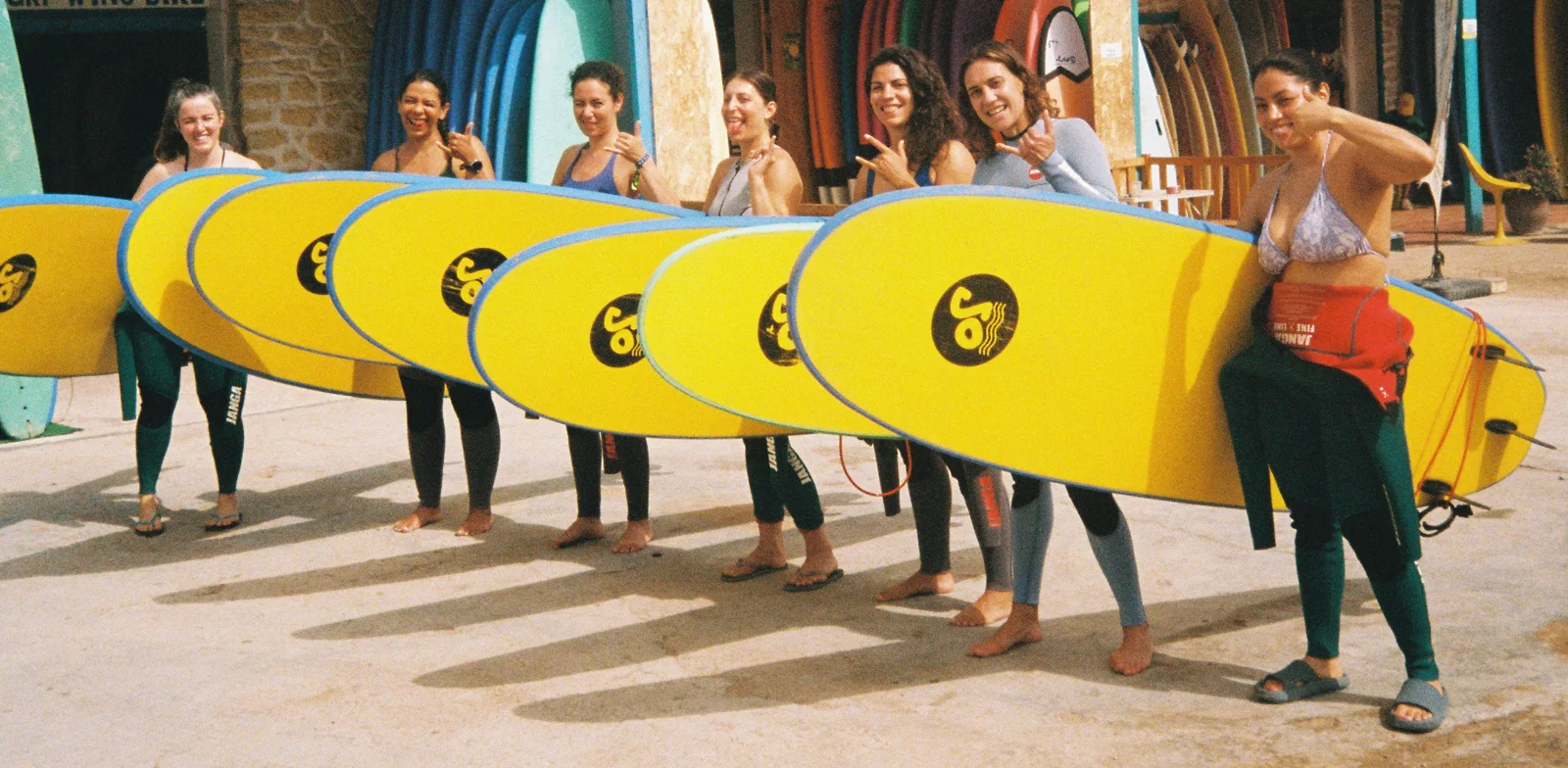
For confident intermediate and advanced surfers we offer a guided Anchor Point session, available from our build-your-trip options. One of our local guides chooses the right swell and time, shows you the safest way in and out, explains the line-up and stays close while you surf. You can also add a surf photo and video session to take home your best ride. Questions about conditions or dates? Contact us on WhatsApp.
Coach's tip: Surf it at first light on a weekday and you will get far more waves.