Spot guide
Surfing Devil's Rock: everything you need to know
The wave at Devil’s Rock (Imourane)
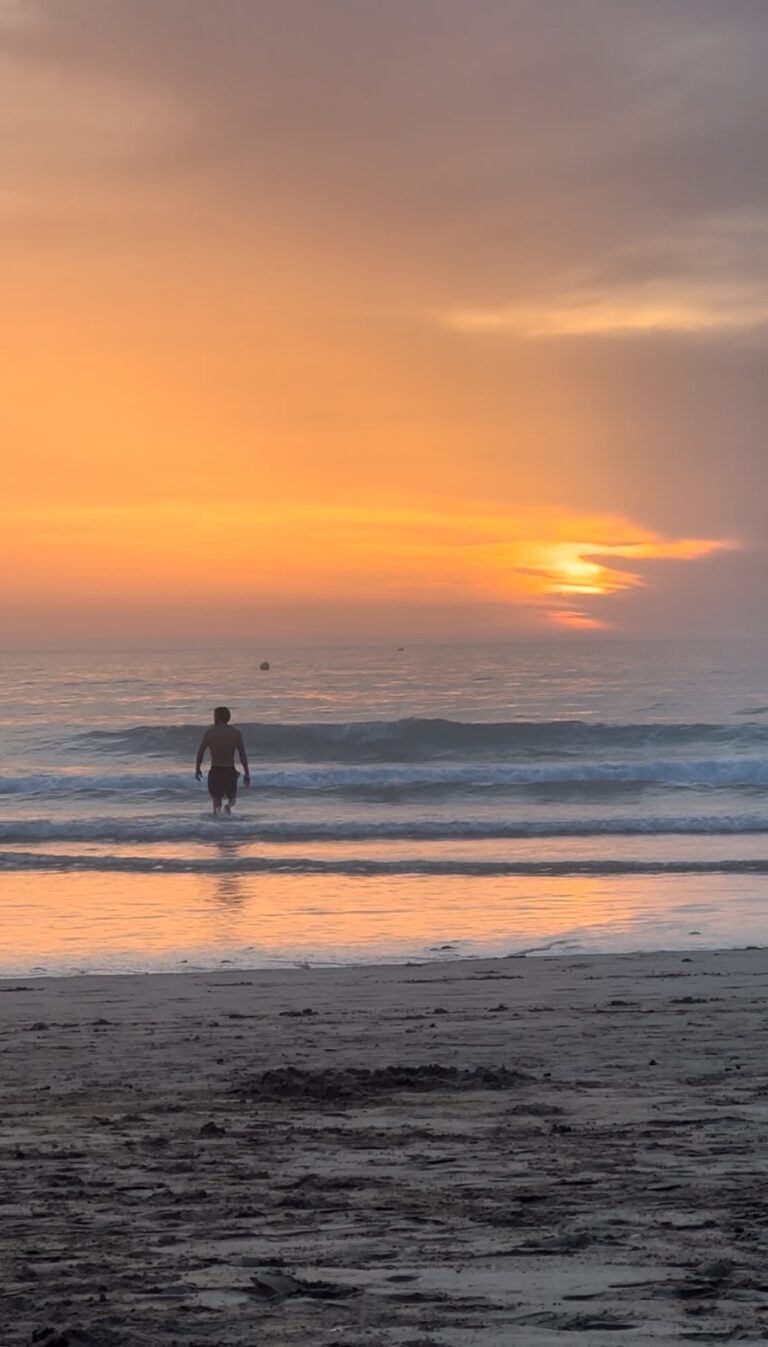
Devil’s Rock is a long sandy beach between Tamraght and Taghazout, known locally as Imourane. The name comes from the dark rock that sits at one end of the bay, and it is the easiest landmark to find when you walk down from the road. There is no single take-off here: the sandbanks create several peaks spread along the beach, with lefts and rights that shift as the sand moves through the season.
On small days the waves roll in gently and break into long lines of white water, which is exactly what you want for your first sessions. As the swell builds, the outside peaks start to form proper green faces with short, playful walls for improvers practising their turns. Once the waves get well over head height the beach tends to close out, the paddle becomes hard work and the white water turns heavy, so it stops being a learning spot.
Best conditions for surfing Devil’s Rock
| Factor | Best conditions |
|---|---|
| Swell direction | SW to N |
| Wave size | Works from about 0.4 m, ideal 0.6 to 1.5 m, too big above about 2.2 m |
| Period | No minimum; works on short and long period swell |
| Wind | Light wind or offshore from the ENE |
| Tide | All tides |
| Best season | All year: small, soft summer waves; more swell from October to April |
The beach faces west-south-west, so it picks up a very wide swell window, from south-west round to north. That is why Devil’s Rock almost always has something to ride, even when the famous points further north are flat. The flip side is that it has no shelter from the north wind: when the afternoon breeze blows hard the surface gets bumpy and the peaks lose their shape. Because the beach works on all tides, you rarely have to plan around the tide chart; the wind and the size matter much more.
Who should surf Devil’s Rock?
Beginners are the main crowd here, and for good reason. The sandy bottom, the forgiving white water and the gentle slope make it one of the safest places in the area to learn to stand up. Stay on the inside, close to your instructor, and focus on paddling and pop-ups before you look at the green waves.
Improvers will enjoy the outside peaks on a clean day between waist and head high. It is a good place to learn to read a beach break, pick the right peak and start angling along the face instead of going straight to the beach.
Experienced surfers may find it a little soft on small days, but it is a useful option when the reefs and points are too small, or for a relaxed session with friends of different levels.
Hazards and local tips
- Keep away from the rock at the end of the beach, especially when the swell pushes water towards it. Surf the open sand in the middle of the bay.
- Rip currents form between the sandbanks, more so when the waves are bigger. If you feel yourself drifting out, paddle sideways towards the breaking waves rather than straight against the current.
- Beginners and surf schools share the inside. Give lessons plenty of space and never ride straight through a group in the white water.
- Out the back, respect the usual priority rules: the surfer closest to the peak has the wave. If in doubt, read our surf etiquette guide for beginners.
- The winter sun is deceptive. Wear sun cream and drink water between sessions, even when the water feels cool.
How to get to Devil’s Rock from Tamraght
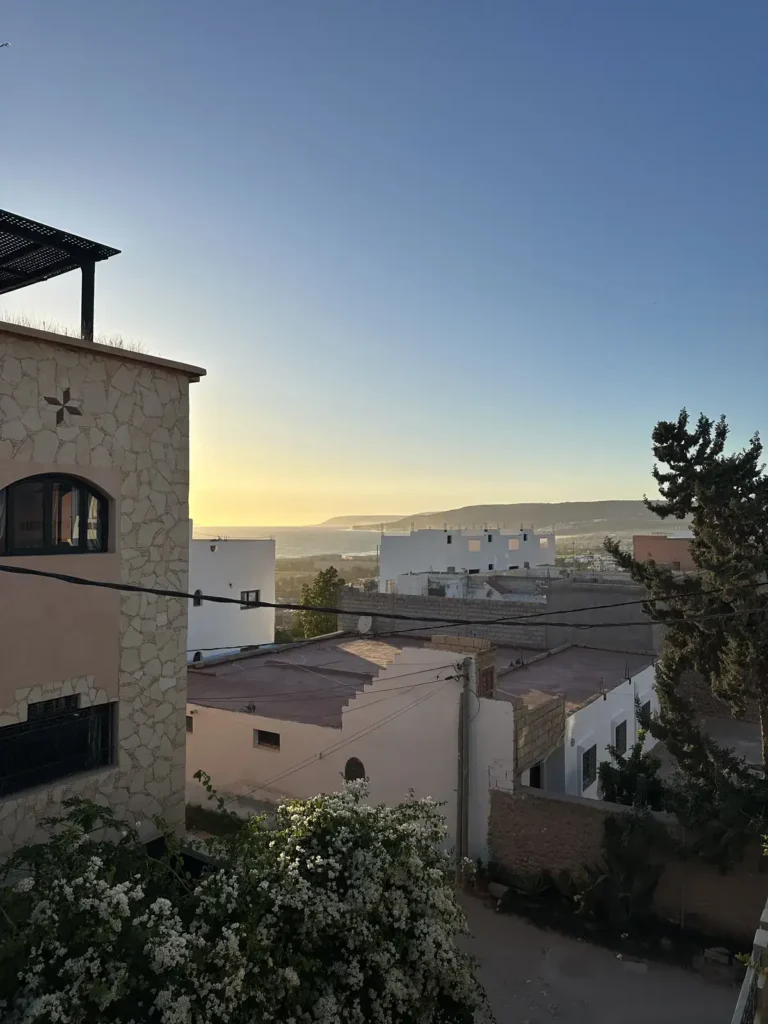
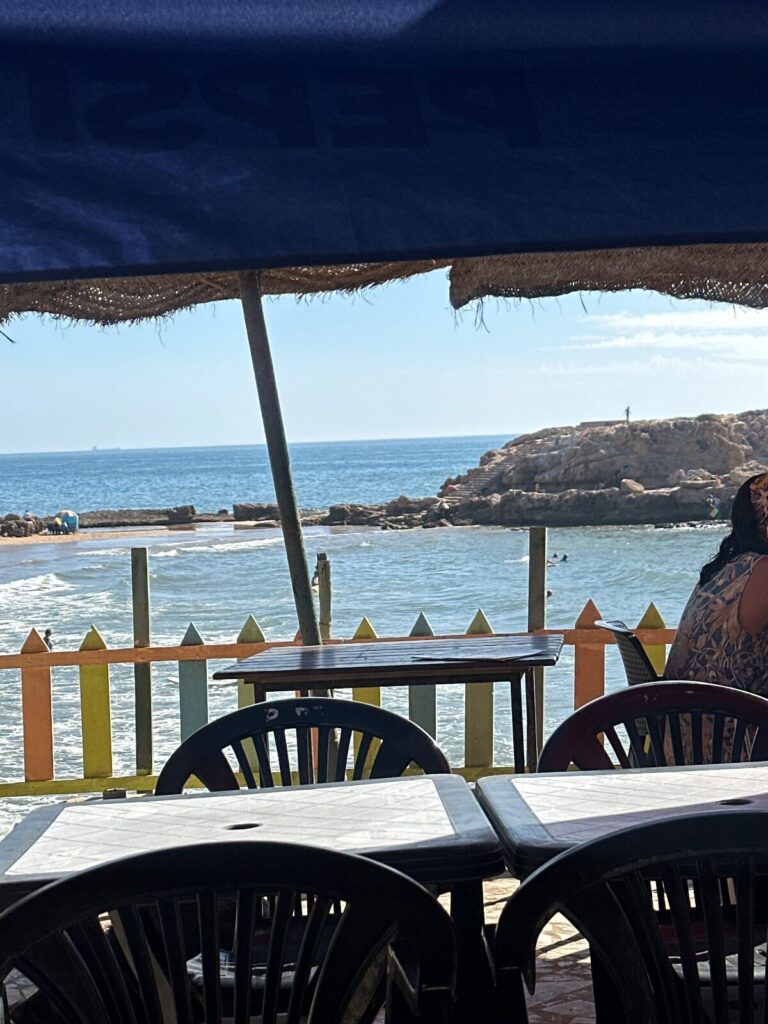
Devil’s Rock sits just north of Tamraght, on the coast road towards Taghazout, about 8 minutes by car from our riad. Coming from Agadir you pass Tamraght first and then reach the turn-off for the beach before Taghazout. The beach cafés along the sand make it an easy place to spend the whole day, with a break for lunch between two sessions. If you want to compare it with the other beaches nearby, Tamraght beach is a few minutes to the south and Panoramas a few minutes to the north.
When to go to Devil’s Rock
You can surf Devil’s Rock all year. From May to September the waves are generally smaller and softer, the water is warmer and it is ideal for first-timers. From October to April the North Atlantic sends more consistent swell, which suits improvers on the outside peaks, while beginners pick the smaller days or stay in the white water. Water is around 17 to 18°C from December to April, so bring a 4/3 wetsuit then, and a 3/2 is enough in summer and autumn.
The best time of day is usually the morning, before the north wind picks up. Since the tide is not critical here, an early session on a light-wind day is almost always the right call.
Surfing Devil’s Rock with Surf Chill Vibe
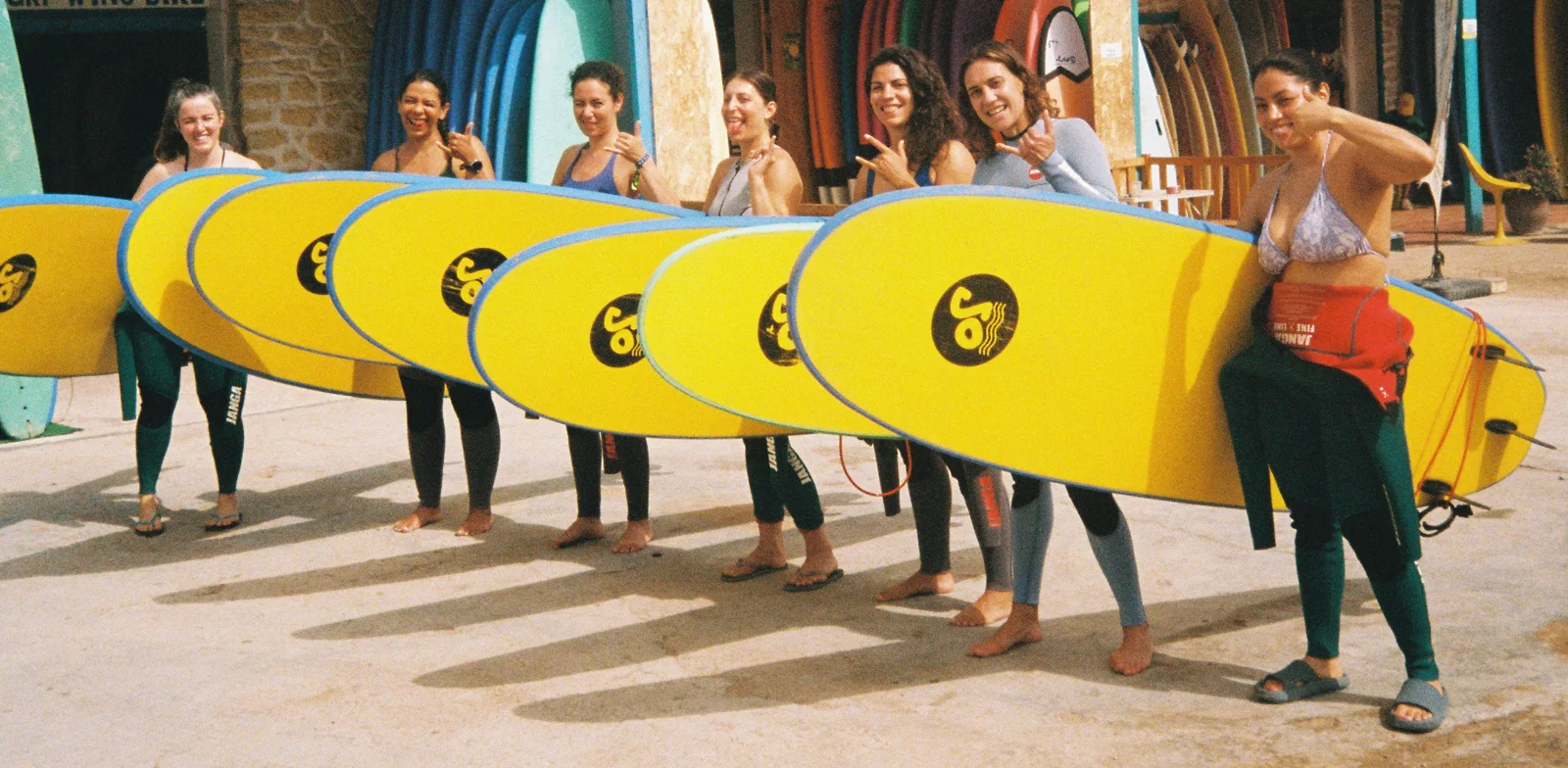
Devil’s Rock is one of the beaches our coaches use most for lessons, especially when Tamraght beach is busy. Our local instructors keep groups small, choose the peak that suits your level and stay in the water with you. Lessons and transport are included in our surf packages, and if you are staying elsewhere you can book a group or private lesson through our build-your-trip options. New to surfing? Start with our guide to learning to surf in Morocco.
Coach's tip: Good backup for lessons when Tamraght beach is too busy.