Morocco Travel Tips for First-Timers: 12 Things to Know
Visiting Morocco for the first time? These practical tips on money, bargaining, dress, manners and phones will help you relax and enjoy it from day one.
Read this guide inFrançaisDeutschEspañolSvenskaPolskiNorskDansk

Morocco is only a short flight from much of Europe, but it can feel like a different world the moment you step out of the airport. That is a big part of its charm. These Morocco travel tips for first-timers come from years of welcoming guests to the coast near Agadir, and they cover the small, practical things that make the difference between feeling a bit lost and feeling at home by day two.
None of this is complicated. Morocco is welcoming, and people are patient with visitors who make an effort.
Money, bargaining and tipping
1. Money: dirhams, ATMs and cash
The currency is the Moroccan dirham (MAD). It is a closed currency, so you usually cannot buy it before you travel; you get it once you arrive. Some practical points:
- ATMs are easy to find in Agadir, at the airport and in larger towns. Villages like Tamraght have fewer, so take out cash before you head somewhere small.
- Exchange offices are common in cities and usually give fair rates. Keep your receipts if you want to change dirhams back when you leave.
- Cash is king for taxis, markets, cafés and small shops. Cards are accepted mainly in hotels, supermarkets and bigger restaurants.
- Carry small notes and coins. Getting change for a large note in a small shop can be difficult.
2. Bargaining in the souks
In markets and souks, prices for crafts, rugs, leather and souvenirs are usually open to negotiation. Food in shops, supermarket goods and set-menu restaurants are not. Bargaining is a conversation, not a fight:
- Decide what the item is worth to you before you ask the price.
- Let the seller give the first price, then offer a lower figure with a smile.
- Meet somewhere in the middle. Take your time and accept the mint tea if it is offered.
- If you cannot agree, thank them and walk away politely. Only start bargaining if you are genuinely interested.
A good place to practise is Souk El Had in Agadir, one of the biggest markets in the country, which is included in our surf packages.
3. Tipping
| Situation | What is usual |
|---|---|
| Café | Round up or leave a few coins |
| Restaurant | Around 10 percent if service is not included |
| Taxi | Round up the agreed fare |
| Guides, drivers, hammam staff | A tip at the end is appreciated |
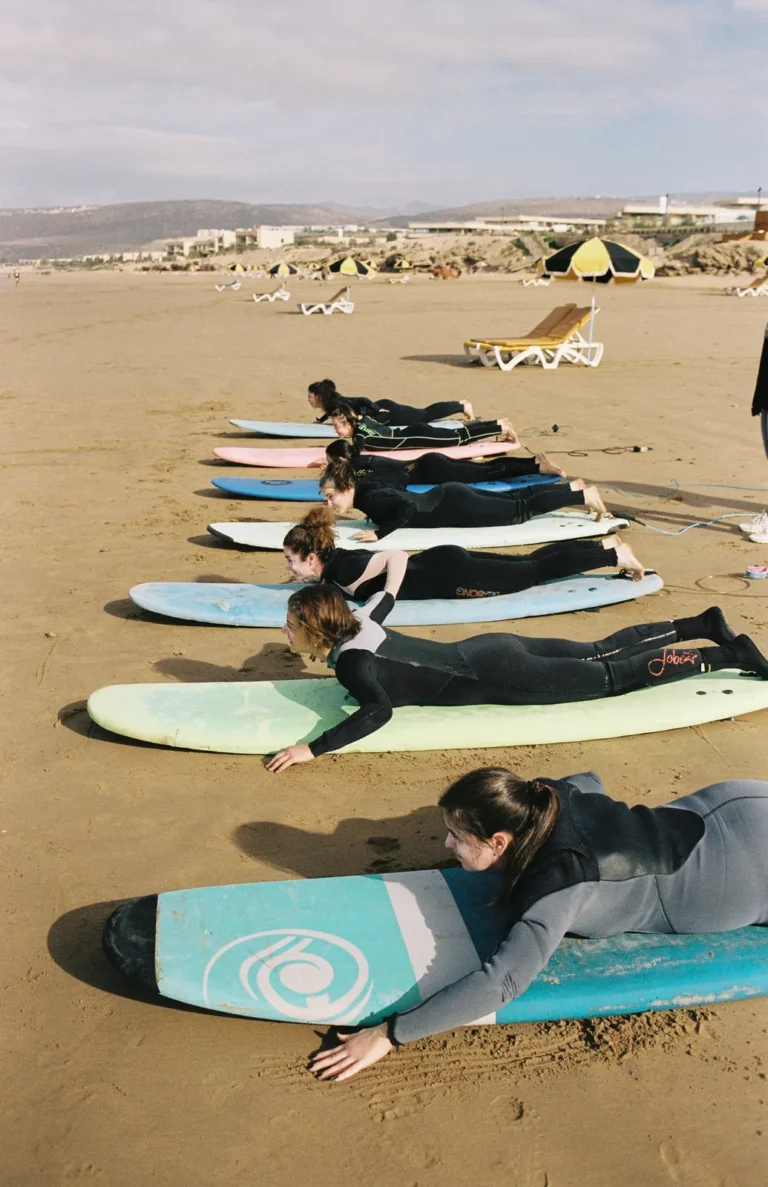
| Surf instructors and camp staff | Optional; many guests leave something at the end of the stay |
Dress, manners and photos
4. What to wear
Morocco is a Muslim country with a relaxed attitude on the surf coast, but modest dress is appreciated, especially in medinas, villages and rural areas. Loose clothes that cover shoulders and knees are comfortable in the sun and help you blend in. On surf beaches, wetsuits, board shorts and swimwear are completely normal; just throw on a T-shirt and shorts when you walk back through the village. We go into more detail for women in our guide to a surf trip for women in Morocco.
5. Greetings and manners
A few words go a long way. Salam alaikum (peace be upon you) is the classic greeting, answered with wa alaikum salam. Shukran means thank you. French is widely spoken, and in the south you will also hear Tamazight, the Amazigh language. Other useful habits:
- Greet people before asking a question. Launching straight into business feels rude.
- Use your right hand for eating, giving and receiving.
- Accept mint tea when offered if you can. It is a sign of welcome.
- Public displays of affection are best kept low-key.
6. Taking photos of people
Always ask before photographing someone, and accept a no gracefully. Some people prefer not to be photographed for personal or religious reasons, and some street performers or stallholders may expect a small payment. Landscapes, doors, markets from a distance and your friends are all fair game.
Religion and the rhythm of the week
7. Travelling during Ramadan
During the holy month of Ramadan, many Moroccans fast from sunrise to sunset. Visitors are not expected to fast, and you can still eat in tourist restaurants and at your accommodation, but it is respectful not to eat, drink or smoke openly in the street during the day. Some shops and cafés change their hours. The evenings are special: families break the fast with dates and harira soup, and the streets come alive after dark. The dates of Ramadan move earlier each year, so check them when you book.
8. Friday and prayer times
Friday is the holy day. Some shops close around the midday prayer, and many families eat couscous together afterwards. You will hear the call to prayer five times a day; it quickly becomes part of the rhythm of your stay.
Phones, water and getting around
9. SIM cards and wifi
Local SIM cards with data are cheap and easy to buy at the airport or in phone shops in town; bring your passport. Coverage along the coast is generally good. Most riads and cafés have wifi, and our riad has fast wifi if you need to work, but a local SIM is handy for maps and calling taxis.
10. Water and staying healthy
Drink bottled or filtered water, especially in your first days. Wash your hands before eating, go gently on raw salads until your stomach adjusts, and use strong sun cream: the sun is powerful even in winter. A small pack of rehydration salts and your usual medication are worth packing.
11. Taxis and getting around
Petit taxis work within cities and grand taxis travel between towns, including Agadir, Aourir, Tamraght and Taghazout. Always agree the price before you set off if there is no meter running. Our guide to getting from Agadir airport to Tamraght and Taghazout covers this in detail.
The best of our Morocco travel tips: slow down
Tip number 12, and the most important one: do not rush. Sit on a rooftop, drink the tea, talk to people. Things may run on a different clock from home, and that is fine.
Your first Morocco trip, made easy
If it is your first time, staying somewhere with local hosts takes most of the guesswork away. At Surf Chill Vibe our packages include airport transfers, local guides and trips to the souk, Paradise Valley and more. See the packages, browse the day-by-day itineraries, or get in touch with any question before you fly.
Frequently asked questions
Can I use euros or cards in Morocco?
The local currency is the Moroccan dirham and most everyday payments are in cash. Cards work in larger shops, hotels and some restaurants, but taxis, markets and small cafés expect dirhams.
Do I need to cover up as a tourist in Morocco?
You do not need to wear anything special, but modest clothing that covers shoulders and knees is respectful in towns, villages and medinas. Swimwear and wetsuits are completely normal on surf beaches.
Is tap water safe to drink in Morocco?
Most visitors stick to bottled or filtered water to avoid an upset stomach, especially in the first few days. Use it for brushing your teeth too if you have a sensitive stomach.
Should I tip in Morocco?
Tipping is common and appreciated. Rounding up in cafés, leaving a little extra in restaurants and tipping guides, drivers and staff who have helped you is normal practice.
Ready for waves?
Stay in Tamraght: surf, explore or simply rest
Pick a ready-made week or build your own trip with surf, day trips and meals, and see the full price before you send anything.