Wave Sizes in Morocco Surf Forecasts Explained: What You Will Actually Surf
Confused by the Morocco surf forecast? Learn what wave sizes really mean, how to read swell periods, and pick the right spot for your level.
Read this guide inFrançaisDeutschEspañolPolskiItalianoPortuguêsNederlands
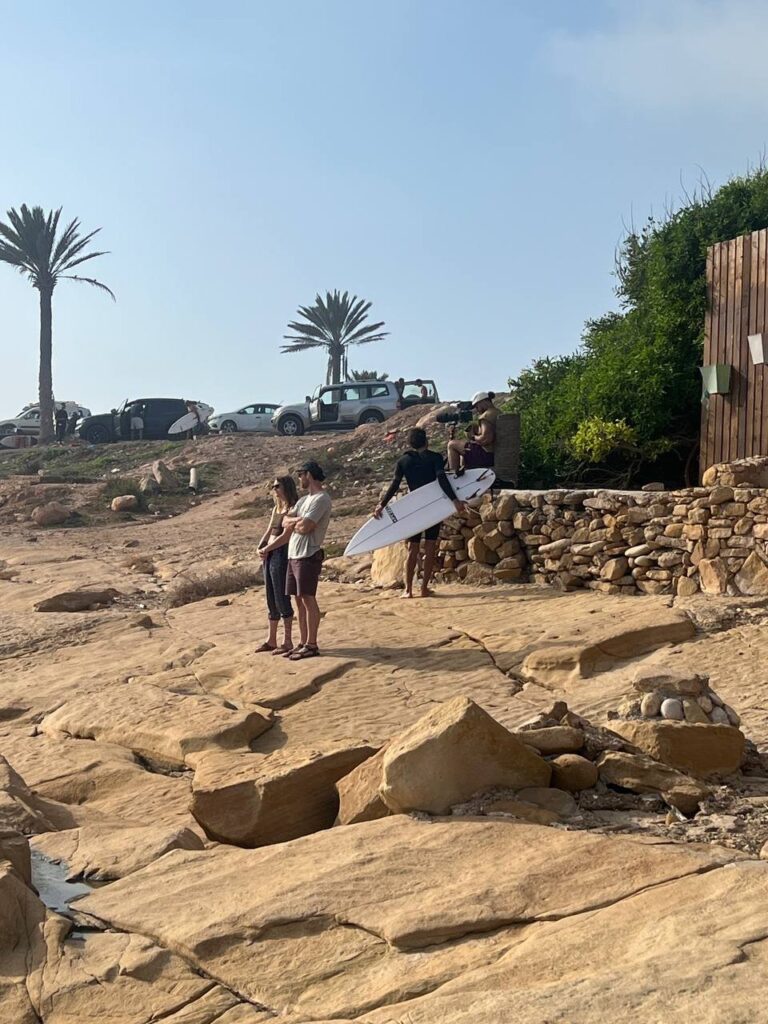
When you check the Morocco surf forecast and see wave sizes of 4-6 ft, that number refers to the open-ocean swell height, not the actual wave you will ride. The breaking wave face at spots like Anchor Point is often bigger, sometimes double what the forecast says. This confuses a lot of surfers who show up expecting chest-high waves and find themselves staring at overhead walls. Here is how to read those numbers so you pick the right spot for your level.
What wave sizes actually mean in a forecast
A surf forecast measures swell energy in the open ocean before it hits the reef or sandbank. When that swell reaches shallow water, it pitches upward and the wave face grows. A 5 ft swell can easily produce a 7-8 ft wave face at Anchor Point because the reef focuses the energy and creates a steep takeoff.
Forecast apps usually display the significant wave height, which is the average of the largest third of waves in a set. That means you will see waves smaller than the forecast, and occasionally one that is bigger. The set waves are what you should plan for, since those are the ones that determine whether a spot is manageable or too heavy for you.
Feet, metres and the Hawaiian scale
Morocco uses feet in most surf reports, but European travellers sometimes think in metres. One metre is roughly 3.3 ft, so a 6 ft swell is just under 2 metres of open-ocean energy.
You also have the Hawaiian scale, which measures the back of the wave rather than the face. On that scale, a "3 ft" day means the wave face is closer to 6 ft. Surfline and most modern apps have moved away from this system, but local surfers in Taghazout still use it in conversation. If someone says it is "3 to 4 foot out there," ask whether they mean Hawaiian or face height before you paddle out.
Matching wave sizes to your level at Anchor Point
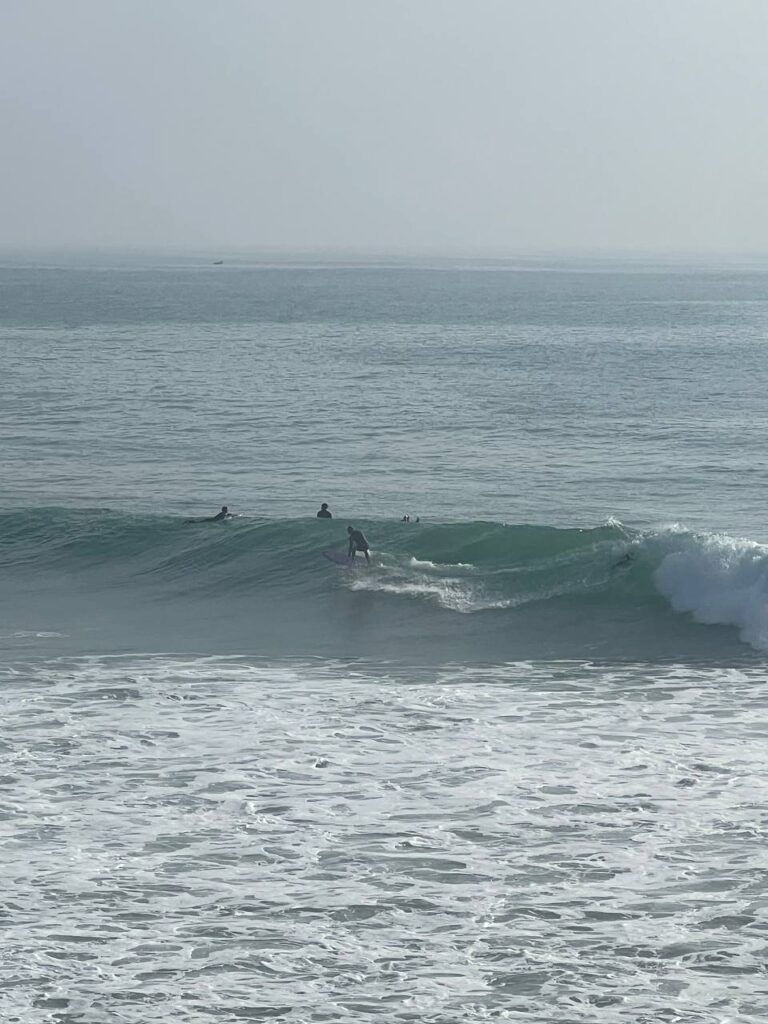
Anchor Point is a right-hand point break that handles winter swell well. It starts working around 3 ft on the face and holds up to 10-12 ft. The wave is fast, with long sections and a barrel section on bigger days. Intermediate surfers can handle it at 3-4 ft on the face, but once it hits 6 ft, the takeoff gets steep and the current pushes you down the line fast.
If the forecast shows 4-6 ft and you are not comfortable on overhead waves, you have good options nearby. Tamraght beach break is five minutes walking from our riad and works well for beginners and intermediates at that size. The beach break spreads the energy across multiple peaks, so the waves are softer and more forgiving. Panoramas in Taghazout is another mellow option that suits longboarders and beginners when the swell is up.
For advanced surfers, a 6 ft swell at Anchor Point is where the spot shows its real potential. Long walls, open faces and a clean barrel section on the inside. Check the Anchor Point surf spot guide for detailed info on tide and wind preferences.
Reading a Morocco winter forecast
Winter is the main swell season here, running September to April. During this period, Atlantic lows send consistent groundswell toward the Moroccan coast. Two numbers matter most: swell height and swell period.
Period is the time between waves in a set, measured in seconds. A 4 ft swell at 16 seconds carries far more energy than a 4 ft swell at 8 seconds. Long-period swells (14 seconds or more) wrap into point breaks like Anchor Point and produce clean, organised lines. Short-period wind swells tend to close out on beach breaks and make conditions messy.
When you see a forecast of 5 ft at 15 seconds, expect well-defined sets with waves that stand up tall on the reef. A 3 ft swell at 9 seconds will look weaker and more jumbled, even if the height number seems similar.
Wind direction is the other factor. Offshore wind from the east or northeast holds the wave face up and cleans the surface. Onshore wind from the northwest chops things up quickly. Check our live surf report for current conditions at Anchor Point and the surrounding spots.
A practical approach: if the forecast shows 4-6 ft at 14+ seconds with offshore wind, Anchor Point will be firing. If you are not ready for that, grab a longboard and head to Tamraght beach or Panoramas. The beauty of this coast is that there is always a spot that matches your level. You can see all our packages and prices or build your trip if you want help planning a week around the right waves.
Ready for waves?
Stay in Tamraght: surf, explore or simply rest
Pick a ready-made week or build your own trip with surf, day trips and meals, and see the full price before you send anything.